
Where to Buy Nicotine Gum: Finding it at CVS, Pharmacies, and Online Stores

If you're looking to quit smoking, nicotine gum offers a simple way to manage cravings and ease withdrawal. This popular nicotine replacement therapy comes in various strengths like 2mg or 4mg and flavors such as mint or fruit. You can find it at big chains like CVS, other pharmacies, or online spots for convenience. Options include sugar-free versions to avoid extra calories while quitting.
For quality choices, check out nicotine gum benefits to see how it helps. Many people pair it with a plan, and resources like creating a quit smoking strategy make it easier. Plus, learn about using nicotine gum at work for busy days.
Take control today! Try Quitine's nicotine gum risk-free with our 30-day money-back guarantee. Join our subscription program for exclusive savings!
Online Stores for Nicotine Gum
Shopping online gives you access to a wide range of nicotine gum brands without leaving home. Prices often beat in-store deals, and you get discreet shipping. Many sites offer subscriptions for regular deliveries, which helps if you're committed to quitting. Look for stores with customer reviews to pick the right strength and flavor.
Discover Quitine and our best NRT products
Why Quitine?
Meet Mark and Oliver, the founders of Quitine. Mark has more than 40 years of experience as a pharmacist. His father’s long struggle with smoking shaped the work he does today. He has spent his career helping people leave cigarettes and vapes behind. Oliver brings deep experience in ecommerce, branding, product development, marketing, and logistics. Together they built Quitine to offer clear, practical nicotine replacement therapies that fit real daily life.
Our NRT products
Our pharmacist-formulated NRT products are made to support you while you change the habits that go with smoking or vaping. We sell and ship to the US.
Combination therapy for higher quit success
Research shows that combining a long-acting nicotine patch with a faster-acting form of NRT such as nicotine gum or nicotine lozenges can raise the chance of quitting smoking by 17 to 37 percent compared with using one product alone. At Quitine our nicotine patches deliver a steady amount of nicotine through the skin all day. Our nicotine gum and lozenges give you something to use when a craving hits. This dual approach, called NRT combination therapy, gives you more flexibility so you can stay comfortable while you change the habit.
Accessible pricing
We believe quitting should be within reach for everyone. We keep our therapies priced so more people can start without cutting corners on quality.
Personalized support
Quitting is personal, and so is the way we work with you. From the customer service team to the way each product is formulated, we stay with you through the process.
The Quitine Circle
The Quitine Circle is our free 90-day guided quit program and private support community. It is open to anyone quitting smoking or vaping and requires no purchase. It follows the same structured, pharmacist-backed approach that shapes our NRT products. You get short training modules, a practical quit workbook, weekly live Q and A sessions, and a moderated space with other people who are quitting, so you do not have to rely on willpower alone.
Discover which NRT is right for you
Not sure which product suits you best? Take our personalized quiz to find the NRT product that fits your needs. Take the Quiz
Real quitters. Real success.
See what our customers are saying about Quitine nicotine replacement therapy. Read Case Studies
The Quitine guarantee
Your satisfaction is covered. Learn more about our 30-day money-back promise. Learn More About Our Guarantee
Discover our best nicotine gum - Quitine
1) Quitine Nicotine Gum 4mg Fruit 240 Pieces
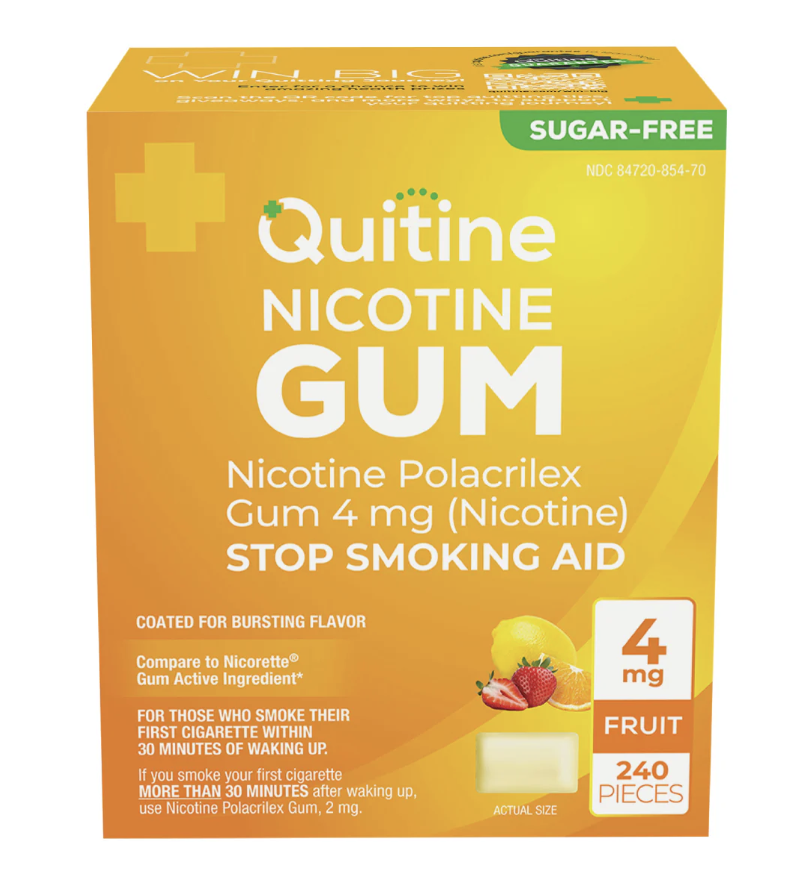
Description (Quitine Nicotine Gum 4mg Fruit 240 Pieces):
240 pieces per pack.
Start here if you smoke or vape within 30 minutes of waking. If you smoke later in the morning, the 2 mg strength may fit better.
The gum has a long-lasting fruit flavor. You chew it until you feel a tingle, then park it between your cheek and gum. Repeat the chew-and-park cycle for about 30 minutes. The fruit taste stays strong through the full chew time.
You can buy the pack once or set up a subscription for automatic delivery. The product is covered by our 30-day money-back promise.
2) Quitine Nicotine Gum 2mg Fruit 240 Pieces
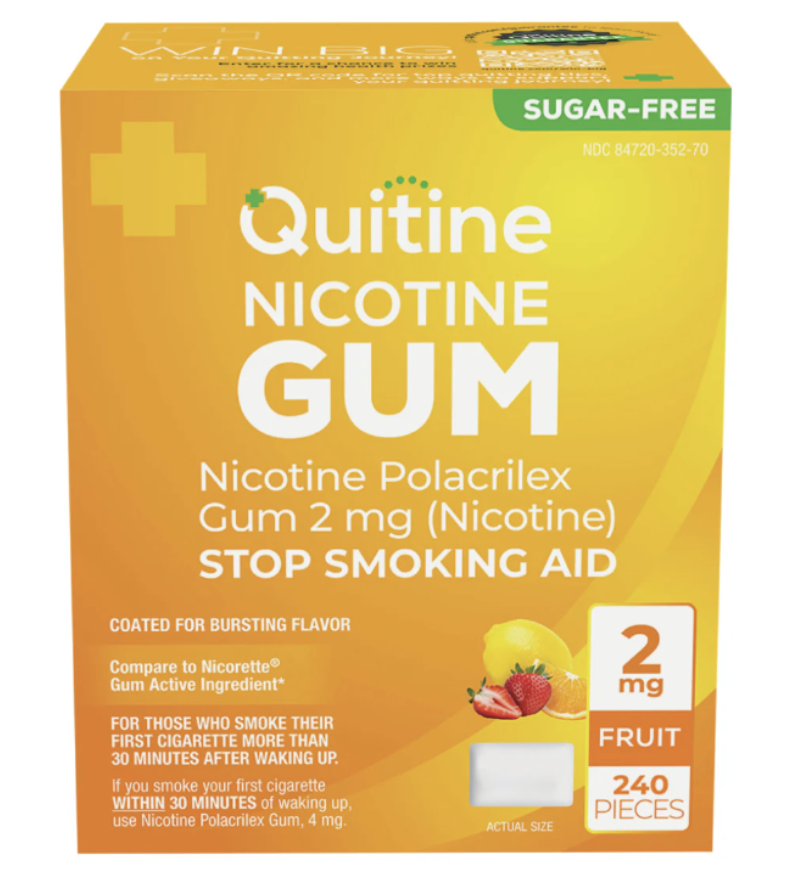
Description (Quitine Nicotine Gum 2mg Fruit 240 Pieces):
240 pieces per pack.
Start here if you smoke or vape more than 30 minutes after waking.
The gum has a long-lasting fruit flavor. You chew it until you feel a tingle, then park it between your cheek and gum. Repeat the chew-and-park cycle for about 30 minutes. The fruit taste stays strong through the full chew time.
You can buy the pack once or set up a subscription for automatic delivery. The product is covered by our 30-day money-back promise.
3) Quitine Nicotine Gum 4mg Mint 240 Pieces
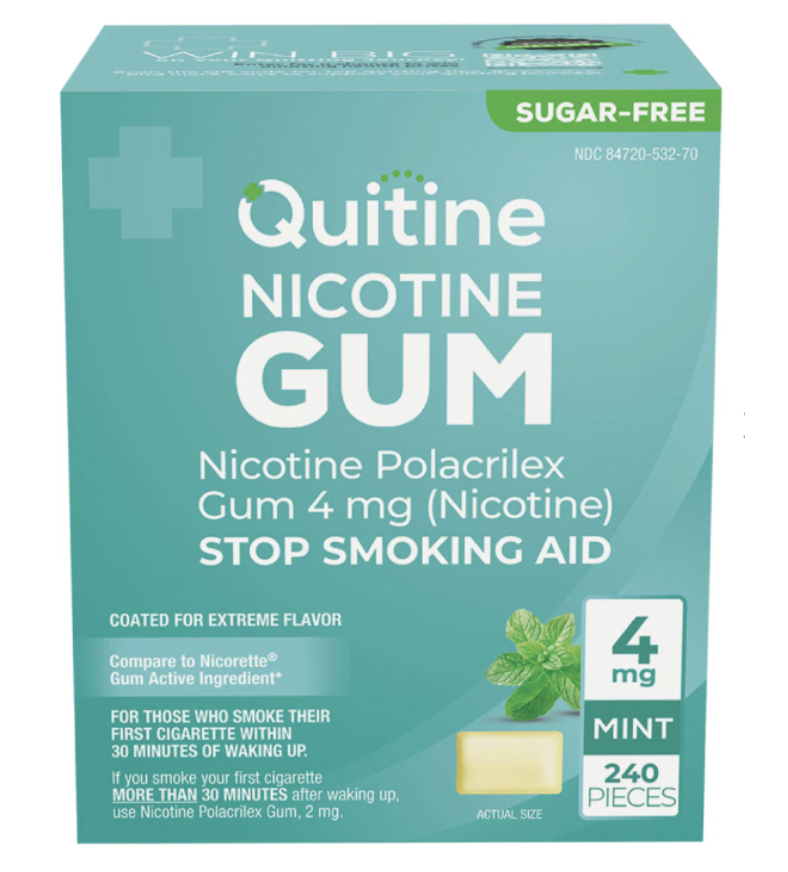
Description (Quitine Nicotine Gum 4mg Mint 240 Pieces):
240 pieces per pack.
Start here if you smoke or vape within 30 minutes of waking.
The gum has a long-lasting mint flavor. You chew it until you feel a tingle, then park it between your cheek and gum. Repeat the chew-and-park cycle for about 30 minutes. The mint taste stays strong through the full chew time.
You can buy the pack once or set up a subscription for automatic delivery. The product is covered by our 30-day money-back promise.
4) Quitine Nicotine Gum 2mg Mint 240 Pieces
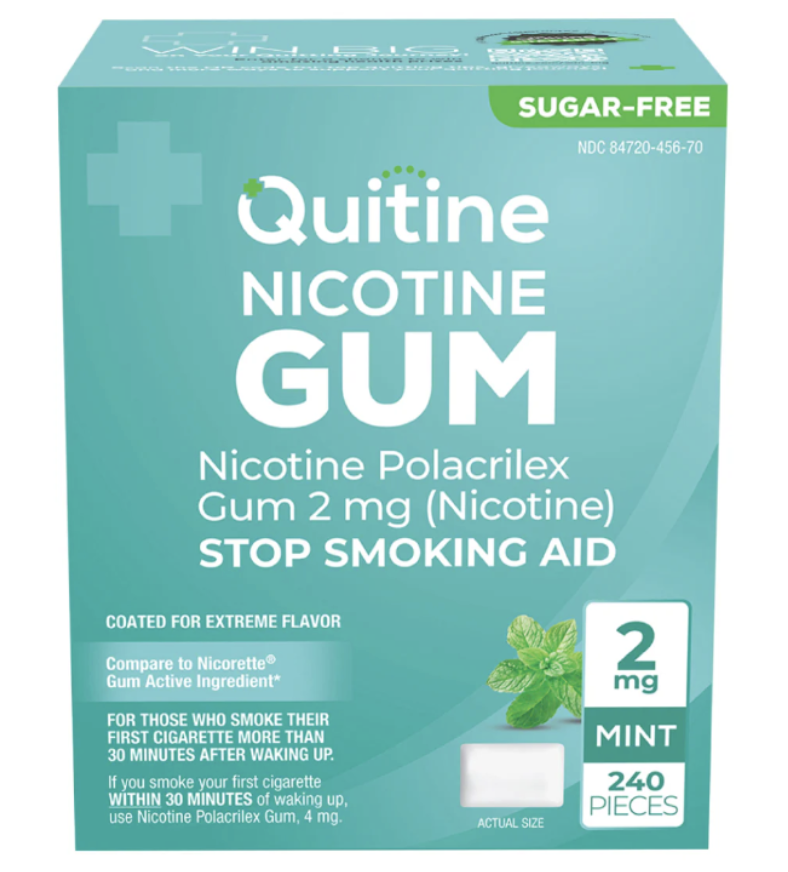
Description (Quitine Nicotine Gum 2mg Mint 240 Pieces):
240 pieces per pack.
Start here if you smoke or vape more than 30 minutes after waking.
The gum has a long-lasting mint flavor. You chew it until you feel a tingle, then park it between your cheek and gum. Repeat the chew-and-park cycle for about 30 minutes. The mint taste stays strong through the full chew time.
You can buy the pack once or set up a subscription for automatic delivery. The product is covered by our 30-day money-back promise.
How to use Quitine nicotine gum
- Chew the piece once or twice until you taste the mint or fruit flavor.
- Park the gum between your cheek and gum.
- When the flavor fades, chew again and park it once more. Keep this chew-and-park cycle going for up to 30 minutes.
- Use one piece every one to two hours. Do not chew the gum nonstop, as that can make the experience less comfortable and may leave you feeling queasy.
Avoid food and drinks for 15 minutes before you start. Coffee, soda, and other acidic drinks can get in the way of a smooth session.
2. Amazon
Amazon holds a wide nicotine gum shelf in one search. Name-brand stop-smoking gum sits next to store labels and third-party packs. Filters split the page by 2 mg or 4 mg, mint or fruit, coated or uncoated, and piece count. A small starter sleeve and a bulk box can show up in the same row, which is why many people use the page as a price check before they buy anywhere else.
Prime shipping is the draw when a local aisle is empty. A box can land the next day in a lot of zip codes. Review photos help, but they are not a freshness stamp. The "ships from" line matters. An official brand storefront and an outside seller can share the same product title. Stale gum is the risk that comes with that mix. A flat taste or a hard piece is the usual clue.
Seasonal sales cut the ticket on bigger counts. That can make Amazon a strong cheapest place to buy nicotine gum stop for a multi-week supply, if the seller is known and the date is readable. It is a weaker stop for a same-hour craving. Age checks happen at checkout. HSA or FSA cards work on some listings and fail on others, so the payment line is worth a look before the order is placed.
3. Northerner
Northerner is a nicotine shop, not a general store. The gum aisle leans toward newer oral brands, with bulk packs built for people who chew several pieces a day. Prices are set to sit near drugstore name brands, and U.S. shipping is built for a repeat box, not a one-time pantry run. A loyalty cut shows up on later orders once a buyer is already on a schedule.
Product pages go deeper than a big-box listing. Strength, flavor, and how the piece is chewed sit near the top. That helps if mint-and-original drugstore gum has already worn out and a fruit or coated piece sounds better. The catalog feels modern. It is a weak match for someone who only wants a 20-piece sleeve tonight.
Stock turns over because the shop sells nicotine products all day, not as a side aisle. That does not replace reading the pack date. A bulk tin can still sit. Buyers who want a known nicotine polacrilex dose, rather than a lifestyle pouch, still have to read the front panel. Quit gum and consumer oral nicotine are not the same job.
For a longer quit, the bulk format is the reason people bookmark the site. A 4 mg fruit box is the kind of count this shopper is already used to buying.
4. Prilla
Prilla sells nicotine gum with price and a short checkout as the main draw. Pack sizes vary, so a first order can stay small and a later order can stretch through more of the quit. Promotions show up often enough that the listed price is not always the price people pay. The page stays plain. Dose, flavor, and use notes sit near the top instead of inside a long spec sheet.
Delivery is billed as quick. That matters when a local aisle is empty and the next craving window is already open. Prilla is not a pharmacy counter and it is not a review encyclopedia. It is a direct online shelf for someone who already knows they want gum.
Affordability is the reason it sits next to larger marketplaces. The tradeoff is selection. A buyer looking for a rare flavor may not find it. A buyer who wants 2 mg or 4 mg in a familiar mint or fruit usually will. Reading the active ingredient still matters, since a low price can hide an old lot.
People comparing a direct 240-piece box with a promo sleeve often set the Prilla price per piece beside that larger count.
5. CVS
CVS is the neighborhood default for nicotine gum. The health aisle and the pharmacy counter both carry it. The store brand shows up in mint and original, next to name brands, in 2 mg and 4 mg. Packs run from a short sleeve to boxes near 200 pieces. Sugar-free versions are easy to spot, which matters for people watching teeth while they quit.
The app is where weekly coupons usually live. Those coupons are how many regulars keep the per-piece cost down. Locations are dense in most cities, so an empty box at home often means a short drive, not a shipping wait. Pharmacy staff can answer a basic dose question. The shelf is still the real product.
CVS trades a higher ticket than some online bulk packs for the chance to walk out the same hour. Extra Care deals change by week, so the price on Monday may not match the price on Friday. Stock also moves. A mint 4 mg box can be gone while fruit 2 mg is full. The app stock check saves that trip.
Same-day need is the fit. A planned month of gum is often cheaper in a larger direct box.
6. Walgreens
Walgreens stocks nicotine gum from name brands and from its own line. Cinnamon sits beside the usual mint options. Starter packs and larger ongoing boxes share the shelf, so a first try and a longer supply can happen in one stop. The rewards program adds points on each purchase, and those points are part of how repeat buyers offset the drugstore markup.
Pharmacists on site can talk through gum next to a patch or a lozenge. That helps when the question is combination use, not flavor. Hours run later than many independent pharmacies. That extra window is why a late craving often ends at this counter. Selection is solid, not endless.
myWalgreens coupons rotate. A name-brand sleeve on sale can beat the store brand that week, then flip the next. Photo orders and clinic waits share the same building, so the health aisle can be picked up on a trip that was already planned. Age checks are standard at the register.
The draw is a known brand, a store brand, points, and a person who has sold this product before. People who pair a daily patch with gum for sudden urges often keep both in the same stop.
7. Rite Aid
Rite Aid keeps nicotine gum in the affordable lane. Coated pieces are meant to taste cleaner than older uncoated gum. Strengths cover the usual 2 mg and 4 mg split. Buy-one-get-one deals show up often enough that a two-box trip can cost close to a single-box trip elsewhere. The app lists stock by location, which cuts the wasted stop when one shop is sold out.
Pickup is built for speed. Park, walk to the health aisle, leave. Rite Aid is not the place for a long catalog of boutique flavors. It is the place for a coated piece, a familiar strength, and a promotion that makes restocking less painful. For shoppers who already pass a store on the way home, that mix is the reason it stays on the list.
Store closings have thinned some markets, so the app check matters more than it used to. A listed deal is useless if the tray is empty. Pharmacy hours can be shorter than the front door, which matters only if the question needs a pharmacist rather than a box.
Coated gum is the niche here. A firmer chew with a quicker first taste is what those pieces are built for.
8. Walmart
Walmart is where a lot of people find a lower ticket on nicotine gum. The Equate store line sits beside name brands in 2 mg and 4 mg, often in cool mint or original. Big boxes are the norm. A supercenter health aisle can hold more piece counts than a small drugstore endcap. That is why Walmart shows up in talks about the cheapest place to buy nicotine gum.
Price is the draw. The tradeoff is the walk. A supercenter trip takes longer than a corner pharmacy, and the gum is not always near the pharmacy counter. Neighborhood Market stores are the shorter version of the same shelf. Pickup and delivery exist, but a third-party shopper can grab the wrong strength if the listing is vague.
Rollbacks move. A name-brand box on rollback can undercut Equate for a week. Reading the unit price, not the shelf tag, is the useful habit. Sugar-free wording is common on these packs. Freshness still varies by store. A high-volume supercenter turns stock faster than a quiet one.
People comparing a warehouse-size count with a quit box often set Equate next to a 240-piece fruit pack.
9. Target
Target keeps nicotine gum in the health aisle, with the GoodSense label next to name brands. Same-day pickup is the practical perk. Order from the parking lot, walk in, leave. Coated options such as ice mint and cinnamon show up more often here than in a bare-bones grocery rack. 2 mg and 4 mg are both usual.
The store is bright and the aisle is easy to scan, which helps a first-time buyer who does not want to ask. Circle deals and the RedCard cut the ticket on some weeks. Selection is tidy, not deep. A rare flavor is a miss. Mint, original, and a coated cinnamon are the realistic find.
Pharmacy counters inside larger stores can answer a dose question. Smaller stores may only have the aisle. Stock photos online do not always match the tray, so the pickup note is worth a read before the drive. Age checks happen at the register like any other nicotine sale.
Target fits a planned errand. It is less useful at midnight.
10. 7-Eleven
7-Eleven is a late-hour stop, not a full gum shop. The rack is small, often a short sleeve near the counter, and the price per piece runs higher than a drugstore box. Hours are the product. A craving at 1 a.m. does not wait for a supercenter to open. That is the whole case for this shelf.
Strength choice is thin. One mint strength may be all that is there. Fruit, coated cinnamon, and a 100-piece box are rare. Staff may not know which tray is stocked. The pack can also sit longer than it would in a busy pharmacy, so a glance at the date is fair.
It covers a gap. It is a weak plan for a quit week. People who use this stop once usually move the real supply to a bigger box so the next night is not another small sleeve. Travel days are the other fit, when a flight or a long drive outlasts the pack in a bag.
11. Costco
Costco sells nicotine gum in warehouse counts, usually a name-brand carton rather than a single sleeve. The per-piece price is often the reason members stop here. A two-pack or multi-box brick can cover a long stretch of a quit if the strength is the one already in use. Mint is the common find. Fruit and cinnamon are less reliable.
The limits are membership and the trip. There is no corner Costco. Stock lives on a pallet or a high shelf in the pharmacy area, and it moves in bursts. A visit can mean the flavor you use is gone until the next load. Returns on an opened gum box are not the same as a sealed household item, so the strength check happens before the carton leaves the shelf.
This is a restock store, not a first-night store. It fits someone who already knows 2 mg or 4 mg and wants the unit price down. It does not fit a new quit that still needs a small test sleeve. A scheduled home box of a set strength is the path people use when the warehouse trip is too far for a midweek gap.
12. Kroger
Kroger and its banner stores keep nicotine gum in the pharmacy health aisle. Name brands sit beside the store label in 2 mg and 4 mg, with mint as the default and original close behind. The weekly ad is where the real price lives. A digital coupon on the store brand can undercut a name-brand sleeve that looked cheaper on the tag.
The useful part is the trip people already make. Groceries, a prescription, and a gum box can happen in one stop. Pharmacy staff are on site during posted hours for a basic question about gum next to other medicines. Pickup slots exist, though a shopper can still grab the wrong count if the listing only says "mint gum."
Selection is grocery-sized. It will not match a nicotine-only website. Coated pieces show up in larger stores and vanish in smaller ones. Stock turns with the ad cycle, so a Tuesday coupon run is more reliable than a Sunday night hope. People who want gum for break-time urges, not a warehouse brick, often add a box to a regular grocery trip.
13. Sam's Club
Sam's Club mirrors the warehouse pattern. Nicotine gum shows up in large name-brand packs, and the unit price is the reason members add it to a stock-up trip. Mint 2 mg and 4 mg are the usual trays. A fruit or cinnamon carton is a bonus, not a promise. The club is a restock, not a rescue stop at 11 p.m.
Membership is required. Scan-and-go can speed the exit, but it does not fix an empty shelf. Pharmacy counters inside the club can point to the right strength when the pallet label is vague. Plus-member pricing and instant savings change the ticket by week, so the same carton is not the same price every visit.
Opened product is a weak return. Matching the strength to the quit plan before checkout matters more here than in a store with a 20-piece sleeve. Buyers who use a patch all day and gum for spikes often want that pair planned, not guessed from a pallet. A lozenge stays the quieter swap when chewing is a poor fit.
Factors to Consider When Choosing Where to Buy
Pick a spot based on your needs. Price matters, especially for long-term use, so compare per-piece costs. Check for fresh stock to ensure potency. Read labels for ingredients if you have allergies. Strength depends on how much you smoke: 4mg for over 25 cigarettes a day, 2mg for less. Flavors help stick with it, so try mint if fruit seems too sweet. Age rules apply; you must be 18 or older in most places. For travel tips, read nicotine gum on airplanes. Safety first: consult a doctor if pregnant or with health issues.
Types of Nicotine Gum Flavors
Nicotine gum comes in various flavors that suit different tastes. Mint gives a cool feel in the mouth. Fruit options bring a sweet note without extra sugar. Some gums have classic tastes that feel familiar. Flavors make the gum easier to use daily. People pick based on what they like best. Strong flavors last longer during use. Mild ones work for those who want less intensity. Availability changes by store type. Online spots often have more choices. Pharmacies stock basic flavors like mint.
Strength Levels in Nicotine Gum
Nicotine gum shows up in 2mg and 4mg doses. The 2mg fits light smokers who have fewer cigarettes each day. Heavy smokers go for 4mg to handle stronger cravings. Dose matters for how well it works. Beginners start low to see how their body reacts. Switching strengths happens as quitting progresses. Packages label the dose clearly. Bulk packs save money for ongoing use. Gum with polacrilex releases nicotine slowly. This helps over time.
Benefits of Using Nicotine Gum for Quitting
Nicotine gum doubles your chances of quitting compared to going cold turkey. It releases nicotine slowly through chewing, reducing withdrawal like irritability or headaches. Use it right: chew until peppery, park between cheek and gum, repeat. Combine with support for best results. It's safer than smoking, cutting cancer risks. Many quit within 12 weeks. For oral health concerns, check nicotine gum with dentures. It also helps with oral fixation from smoking habits.
Nicotine Gum Side Effects: What to Expect and How to Manage Them Safely?
Some users notice temporary side effects when they begin Quitine nicotine gum. These feelings often lessen as the body gets familiar with the product.
Guidance from the common mistakes when using nicotine gum helps users adjust their approach. Slow chewing and proper parking in the cheek area reduce discomfort fast for most. Staying hydrated makes the process easier too.
Many switch chewing sides to keep things balanced. Light eating around use time also supports comfort. The subscribe and save program keeps supply steady which helps maintain a consistent routine that minimizes ups and downs.
Comparing Nicotine Gum to Other Quit Aids
Nicotine gum works faster than patches but slower than lozenges. It's discreet and controls dosage per chew. Vs. prescription meds like Chantix, gum has fewer side effects and no doctor visit needed. For vaping, it's effective since both deliver nicotine orally. Learn more in quitting vaping vs smoking. Apps can track usage alongside gum for better success.
Tips for Successful Quitting with Nicotine Gum
Start with the right dose based on your habit. Chew slowly to avoid stomach upset. Set a quit date and taper off gum over months. Drink water to stay hydrated. Join support groups for motivation. If pregnant, talk to a doctor first. Track progress with quit smoking apps. Exercise helps manage weight gain fears.
Real Quitter Reviews & Success Stories: Does Nicotine Gum Actually Work?
Nicotine gum plays a role in many successful quit stories. People share how it helped manage cravings during their daily lives.
The real quitters section has accounts that show real progress. Several users noted the gum fit well into their routines. The case study pages feature journeys where consistent use led to big changes.
Flavors from the nicotine gum collection made the experience more pleasant according to many. These stories highlight how the gum supported long term goals.
How nicotine gum fits a 90-day quit plan
Nicotine gum covers short, sharp cravings. A quit smoking plan covers the weeks after those nicotine cravings quiet down. The first month often feels busy. Hands want something to do. Coffee still pulls at the old routine. A piece of gum handles that spike while the rest of the day stays quieter.
A structured 90-day quit system spaces the work. Early weeks use gum more often. Middle weeks stretch the time between pieces. Later weeks drop the dose as new habits settle. That pacing is why a quit nicotine plan and gum belong in the same kit.
The Quitine Circle sits beside the product. It holds a progress tracker, short video modules, a printable workbook, and weekly live questions. No purchase is required to join. People who buy nicotine gum and also use that kind of support have a place to put the hard days, not only a pack in a drawer.
A two-minute quit smoking quiz maps habit timing to product type. Morning use, vape strength, and how often cravings hit all change the starting mix. Gum is one piece of that mix. The plan is the frame around it.
Pairing nicotine gum with patches and lozenges
Gum gives you a chew-and-park piece you can use after a meal, in a car, or during a stressful call. A nicotine patch is worn through the day. A nicotine lozenge dissolves in place when chewing would feel awkward, such as in a meeting. Combination nicotine replacement therapy is the usual name for using a long-acting product and a short-acting product together.
A Step 1 nicotine patch covers the baseline for much of the day. Gum steps in at the moment a habit used to start. Nicotine lozenges fill the same short-acting role when you want a quieter piece.
Pairing NRT products is common for people who used to smoke or vape on a tight schedule. The patch reduces the all-day pull. The gum keeps the mouth busy at the exact moment the old routine used to begin.
Strength still follows habit timing. Heavier morning use often sits with a higher nicotine gum dose and a higher patch step. Lighter use sits lower. The difference between 2mg and 4mg nicotine gum tracks when nicotine used to start the day.
Nicotine gum pack size and price per piece
Pack size changes what a buyer pays for nicotine gum. A small sleeve covers one bad afternoon. A larger box covers a full week of nicotine cravings. The cheapest place to buy nicotine gum for steady use is usually the bigger box, because the price of one piece drops as the count goes up. A late-counter sleeve often costs more per piece even when the shelf tag looks small.
Quitine is a pharmacist-built nicotine replacement brand. The gum is an FDA-approved, sugar-free, tobacco-free stop-smoking aid. Each piece uses nicotine polacrilex, so the dose on the label is the dose in the piece. Boxes come in 240 pieces.
Buyers who smoke or vape more than 30 minutes after waking often pick 2 mg mint nicotine gum. People who reach for nicotine sooner in the morning often pick 4 mg fruit nicotine gum. The same two strengths also come as 2 mg fruit nicotine gum and 4 mg mint nicotine gum.
Two chew styles sit in those boxes. Nicotine Gum has a familiar texture and a flavor that stays through the chew. Classic gum is firmer, with a first flavor burst that fades as the piece is parked. Orders can be paid with HSA or FSA cards.
Repeat buys and shelf gaps for nicotine gum
The first pack is easy. The second and third packs are where a quit stalls. Nicotine gum runs out on a Tuesday night, and the nearest rack may only hold one strength. A scheduled box closes that gap. Subscribe and save nicotine gum, nicotine patches, or nicotine lozenges on a set rhythm. Common gaps are every month or every six weeks. Each order takes a set amount off the shelf price. An email lands before the box ships, so the date, flavor, or strength can be changed. The plan can be paused or canceled.
This path fits people who already know the strength and do not want a midweek run for another sleeve. A nicotine patch and gum combo is a common pair in the same order. The patch covers the day. The gum is there when a sharp urge hits. How those two roles differ is laid out on nicotine patches vs nicotine gum. People who want a quiet piece instead of a chew often switch some of the order to a lozenge, which is compared in nicotine gum vs lozenge.
Latest News In 2026
Oral nicotine products stayed in the spotlight this year, and nicotine gum sat inside that wider conversation even when headlines focused on pouches.
In May 2026, the FDA posted a programmatic environmental assessment for products in its "other" nicotine group under tobacco-product review. That group includes gums, lozenges, tablets, and similar oral formats. The assessment looked at use and disposal. It noted limited airborne emissions during use and limited leftover chemicals in waste compared with smoked tobacco. That review sits on the tobacco pathway. Quitine nicotine gum remains an FDA-regulated stop-smoking aid.
The same year, the agency kept authorizing selected oral nicotine pouch products and, later in June, allowed a modified-risk claim on a set of pouch flavors for adults who switch completely from cigarettes. That claim does not apply to gum. It does show how tightly FDA now reviews oral nicotine as a category.
On the shopper side, four patterns kept showing up in 2026:
- Combination NRT stayed the practical setup for many adults. A patch for the whole day. Gum or a lozenge for the spike.
- HSA and FSA checkout stayed a normal way to pay for stop-smoking gum when a plan lists cessation as an eligible expense.
- Structured 90-day programs and free support communities sat next to the product itself. People wanted a calendar, not only a flavor.
- Formulas kept leaning sugar-free, with mint and fruit as the default taste families. Short quizzes that sort morning habit and craving style stayed part of how a first order gets matched.
None of that changed the basic buying rule. The right pack is the one that matches dose, taste, and how fast pieces get used. The news around oral nicotine made the category more visible. It did not replace a clear label or a plan that lasts past week two.
Read Also:
Frequently asked questions
Yes, studies show it boosts quit rates by 50-70% when used as directed for 8-12 weeks. Pair it with behavioral changes for lasting results. Always follow package instructions to wean off safely.
Common ones include mint, fruit, cinnamon, and original. Mint is popular for fresh breath, while fruit appeals to those wanting something sweet. Try samples if possible to find your favorite.
It's generally safe for adults over 18, but check with a doctor if you have heart issues, are pregnant, or under 18. Avoid if allergic to ingredients. It doesn't cause cancer like tobacco.
A 100-piece pack runs $20-40, depending on brand and store. Generic options save money. Subscriptions online often cut costs by 10-20%.
Airports, gas stations, and online stores with fast shipping work well. Pack extras in carry-on. For more, see travel-specific advice on usage.
Nicotine gum acts as a replacement for the nicotine in cigarettes. It comes in small pieces that you chew. The gum releases nicotine through the mouth lining. This cuts down on withdrawal feelings like restlessness. Many find it handy for on-the-go use. For those with oral health concerns, using nicotine gum with dentures or braces fits certain situations. It differs from regular gum in its medical purpose.
You chew the gum until it softens, then park it against your cheek. Nicotine absorbs into the bloodstream this way. The process repeats for about 30 minutes per piece. It mimics the hand-to-mouth habit from smoking. Steady release helps keep levels even. People use it during tough moments like after meals. Some combine it with apps for tracking progress.
Gum offers 2mg for milder needs and 4mg for more support. Light users stick with lower doses. Those with heavier habits choose higher ones. Strengths appear on the box for easy spotting. Quitine nicotine gum 4mg mint provides a fresh option in stronger form. Doses help tailor to personal smoking levels. Switching down happens after weeks of use.
Flavors range from mint to fruit and sometimes original. Mint refreshes the breath quickly. Fruit adds a pleasant twist. Some prefer classic for no extra taste. Quitine nicotine gum in fruit flavor suits those who want variety. Choices depend on personal preference. Flavors make sticking to the routine simpler. They mask any bitter notes from nicotine.
Adults over 18 qualify for nicotine gum in some areas but not the U.S. where you have to be 21. It helps smokers ready to quit. Those with heart issues check with a doctor first. Pregnant people avoid it unless advised. Gum fits busy lifestyles. Using nicotine gum at work blends into daily breaks. It supports gradual reduction. Users with allergies read labels carefully.
Use lasts up to 12 weeks in most cases. Start with full doses, then taper off. Timeline varies by individual progress. Some need less time if cravings drop fast. Tracking helps adjust the period. What to expect when you quit smoking covers body changes over weeks. Gum aids the shift to nicotine-free life. Consistent use builds better habits.
Chew slowly until a tingle starts, then tuck the gum in your cheek. Let it sit for absorption. Chew again when the tingle fades. This cycle goes on for half an hour. Technique maximizes nicotine release. It prevents swallowing too much. Beginners practice to get it right. Quitine classic nicotine gum works well with this approach. The nicotine gum method feels natural after a few tries.
Some feel mouth soreness or hiccups at first. These often fade with proper use. Avoid chewing too fast to cut risks. Upset stomach happens if swallowed. Most side effects stay mild. Switching flavors can help. Using nicotine gum for stress relief eases feelings. Gum proves safer than continued smoking. Adjust dose if issues persist.
Keep gum in a cool, dry spot away from heat. Original packaging protects it best. Avoid direct sun or moisture. Shelf life reaches up to two years unopened. Once started, use within months. Travel packs fit easily in bags. For flights, using nicotine gum on airplanes during travel is handy. Proper storage maintains effectiveness.
Gum requires chewing while lozenges dissolve slowly. Both deliver nicotine but in unique ways. Gum satisfies oral fixation more. Lozenges suit those who dislike chewing. Benefits of nicotine lozenges highlight their steady release. Choice depends on preference. Some alternate between forms. Gum offers quicker control over dosing.
Many gas stations keep nicotine gum stocked near the registers for easy access during travel or late hours. These small packs come in common flavors but offer fewer choices overall. The convenience makes them popular for unexpected cravings when other options are not nearby.
Nicotine gum holds its quality for months when stored properly in a cool and dry spot. Heat and moisture can affect the texture and effectiveness of the pieces over time. Always glance at the expiration date marked on the package before opening a new one. The subscribe and save program helps keep fresh supplies on hand.
The chew and park technique begins with slow chewing of the nicotine gum piece a few times. Once the tingle starts users park it comfortably inside the cheek for steady release. Repeating the pattern throughout the session helps manage nicotine delivery smoothly.
Nicotine gum provides flexible dosing that fits around busy daily schedules. The chewing action offers a satisfying oral distraction many people seek during the quitting process. Small and discreet packaging allows easy carrying in pockets or bags wherever life takes you.
The personalized quiz considers personal habits when suggesting suitable nicotine gum strengths and flavors from the nicotine gum collection. It focuses on matching daily routines to the right support level. This tailored guidance leads to a more comfortable experience overall.
Start your smoke-free life with Quitine's effective nicotine gum options now.
Nicotine gum is an FDA-regulated stop smoking aid. A piece is meant to cover a craving spike and give the mouth something to do while cigarettes or a vape stay out of the day. It does that job when the chew-and-park method is used, the milligram strength matches waking habit, and pieces are on hand before the usual cue hits. Chewing it like regular gum, skipping pieces on busy days, or keeping the old smoke or vapor in the same slots makes the carton look weaker than it is. The gum is one layer.
Yes. Using a nicotine gum and nicotine patch pairing is called combination therapy, and it is built around two jobs rather than two competing products. The patch stays on through work, sleep, and the afternoon slump. The gum is reserved for a known trigger, such as the first coffee or the drive home. Acidic drinks and food are usually paused for 15 minutes before a piece, because they can flatten the taste and the chew. The carton lists a daily piece limit, and that limit still applies when a patch is already on.
Yes. Nicotine gum for people leaving a vape gives the mouth and hands a job at the moments a device used to come out, such as after a meal or during a work break. Dose still follows waking time and how strong the old device was, which is the same habit-timing rule used for cigarettes. The charging cable, the first coffee, and the walk outside are common vape cues that need a replacement, not only a flavor.
Adults only. Eighteen is the common minimum across the United States, and retailers plus websites request proof of age before the sale. Some checkout flows use an ID upload or an age gate before the cart can close. The product is sold as a stop-smoking aid, so child-resistant packaging is part of the carton design. Keeping opened packs out of reach at home matters as much as the checkout rule.
Pharmacies, grocery health aisles, some convenience stores, and the brand site all carry nicotine gum, and the range changes with the aisle. A pharmacy counter is where questions about other medicines usually get answered, since the gum is an over-the-counter stop-smoking aid with nicotine polacrilex on the label. Grocery stores often split stock between a front-end impulse rack and a larger health-aisle box. The full mint and fruit range in both strengths sits with the rest of the nicotine products. Age checks are common at the register and on an online order.
For steady use, the lower price per piece usually sits with a larger direct box, or with a scheduled restock of that same box. A one-off sleeve looks smaller on the receipt and still costs more once the count is divided into single pieces. Shipping on a tiny order can widen that gap again, while a repeat box already on a set rhythm avoids the midweek replacement buy. Flavor and strength still come first, because a low tag on the wrong milligram does not cover the morning pattern the buyer already has. HSA or FSA payment does not change the piece-count math. It only changes how the same box is paid for.
Yes. Online orders are how many people get a full mint or fruit box without checking whether the local rack still has their strength. A useful listing names the milligrams, the flavor, the piece count, and nicotine polacrilex as the active ingredient. Sealed cartons also show a lot or pack date, which matters because an old sleeve can taste flat even when the dose on the label is unchanged. Summer shipping can soften a piece if the carton sits in a hot truck, so a firm arrival and a readable date are the practical checks. The chew-and-park steps for that piece are laid out on how to use NRT.
A listing is easier to trust when it shows the strength, the flavor, the piece count, sugar-free wording, the active ingredient name, and a pack or lot date when the seller has one. Chew style belongs on that same panel. Nicotine gum keeps a familiar texture and a flavor that stays through the chew, while Classic is firmer and gives a first flavor burst that fades once the piece is parked. Inactive ingredients matter for people watching sweeteners or a gelatin note, and that list lives on nicotine gum ingredients. Mint and fruit notes sit with the gum range, separate from the dose. A sleeve count and a box count are different numbers, so the piece total is the figure that sets the price of one piece.
Often, yes. On a brand site, gum, patches, and lozenges sit in the same quit group, and many pharmacy aisles do the same. People who already use a patch for the long part of the day often keep gum for a sharp urge, which is the split covered on nicotine patches vs gum. The labeled dose stays on each product. Gum does not replace the patch schedule, and a patch does not give the mouth something to do during a break.